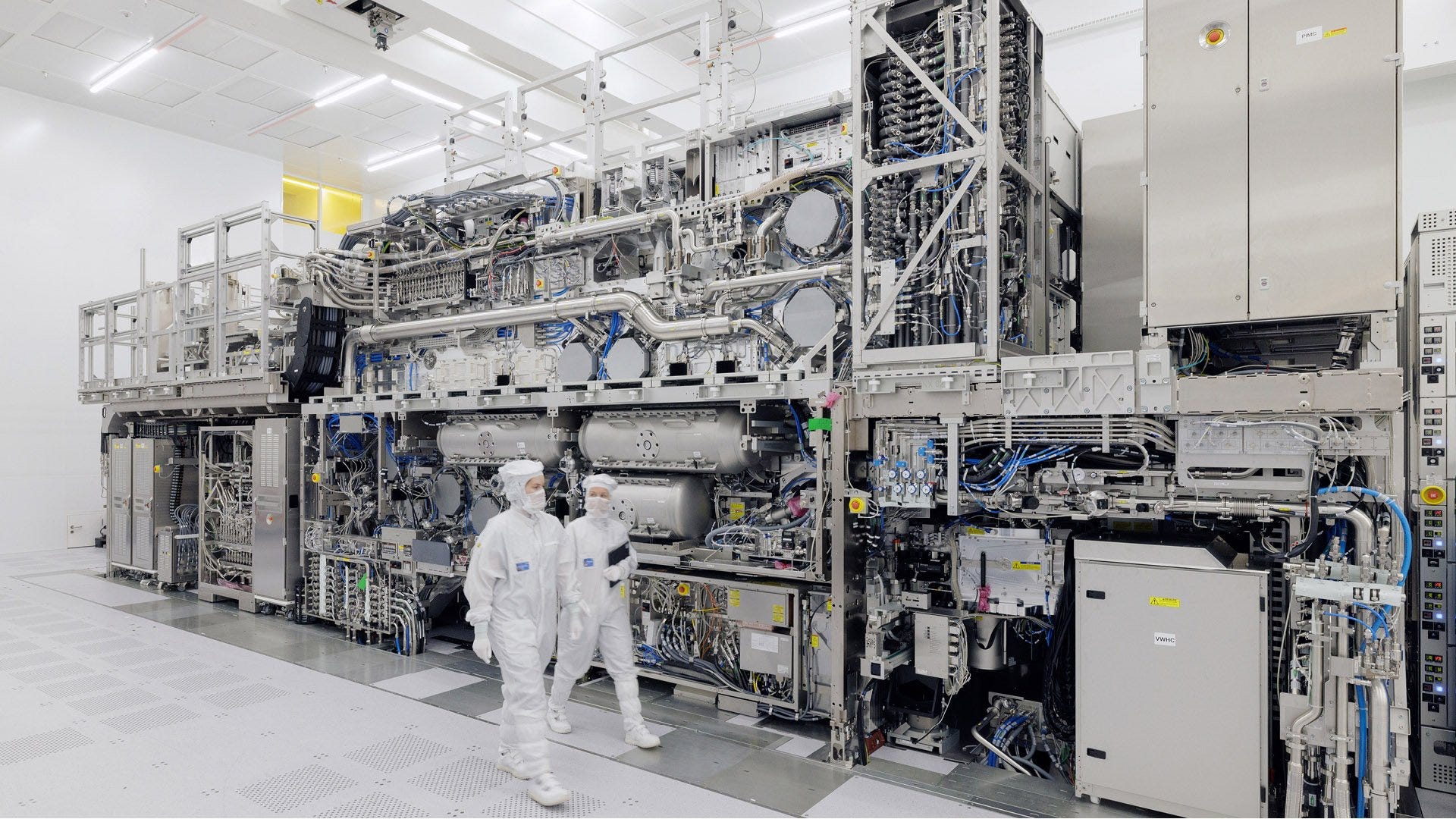
When a semiconductor giant like ASML announces it’s cutting ~1,700 roles, the reflex is to read it as caution, slowdown, or cost discipline. That’s the wrong frame.
What ASML is actually doing is re-optimizing for speed. Specifically, engineering speed. The company is trimming leadership and management layers in Tech and IT while explicitly adding engineering capacity and reassigning many former managers back into individual contributor roles. That distinction matters.
This is not a retrenchment. It’s a structural signal.
A rare, high-quality talent release valve
For startups in hardware, industrial software, equipment, and deeptech, this creates a short window of opportunity. ASML doesn’t employ generic managers. It employs people who have:
shipped systems that take years to assemble,
coordinated multi-physics engineering across suppliers,
lived inside safety-critical, capital-intensive production environments.
Even if many of the displaced roles skew toward leadership, those individuals tend to have deep technical backgrounds. Some were engineers who were pushed into management as the company scaled. This is one of the cleanest talent inflection points European deeptech has seen in years.

The quiet opportunity: engineering-throughput startups
ASML’s internal language is unusually candid: engineers are spending too much time coordinating, reporting, and managing slow process flows. For startups, this is the most interesting signal of all.
There is growing demand for products that:
reduce coordination cost in complex hardware programs,
automate verification, validation, and traceability,
manage long-lived codebases and configuration drift,
close the loop between design, test, and manufacturing data.
Not generic SaaS. Not dashboards for executives. Tools that directly increase engineering throughput in environments where mistakes cost millions.
ASML’s move is a reminder that even the most elite industrial organizations are still fighting friction at the seams.
What startup founders do next?
If you’re building in or around the semiconductor stack, these are your opportunities:
Hiring: Look for ex-ASML talent who owned outcomes, not headcount.
Product: Sell cycle time, validation speed, and decision quality, not “productivity.”
Positioning: Frame your company as removing friction from engineering, not adding another layer.
ASML is choosing to fix organizational drag while it’s still winning. That should tell startups two things: first, speed still matters, even at the top of the stack. Second, companies that help engineers move faster will stay relevant no matter where the cycle turns.
If you, dear entrepreneur, are building for that world, the signal is very strong.